
Professional Padel Court Lighting Installation in Houston
Energy-efficient LED sports lighting systems for optimal evening play
Proper lighting transforms padel courts from daytime-only facilities into versatile sporting venues that maximize usage and revenue potential. Professional lighting installation requires understanding both the technical requirements for quality illumination and the specific challenges posed by padel's unique playing environment. The enclosed nature of padel courts, with their glass walls and metal mesh, creates reflection and glare considerations that differ significantly from open sports facilities.
Modern LED lighting technology has revolutionized sports illumination, offering superior light quality, dramatic energy savings, and extended lifespans compared to traditional metal halide systems. For Houston facilities, where evening temperatures often provide the most comfortable playing conditions, quality lighting extends usable hours during the hottest months when daytime play becomes impractical.
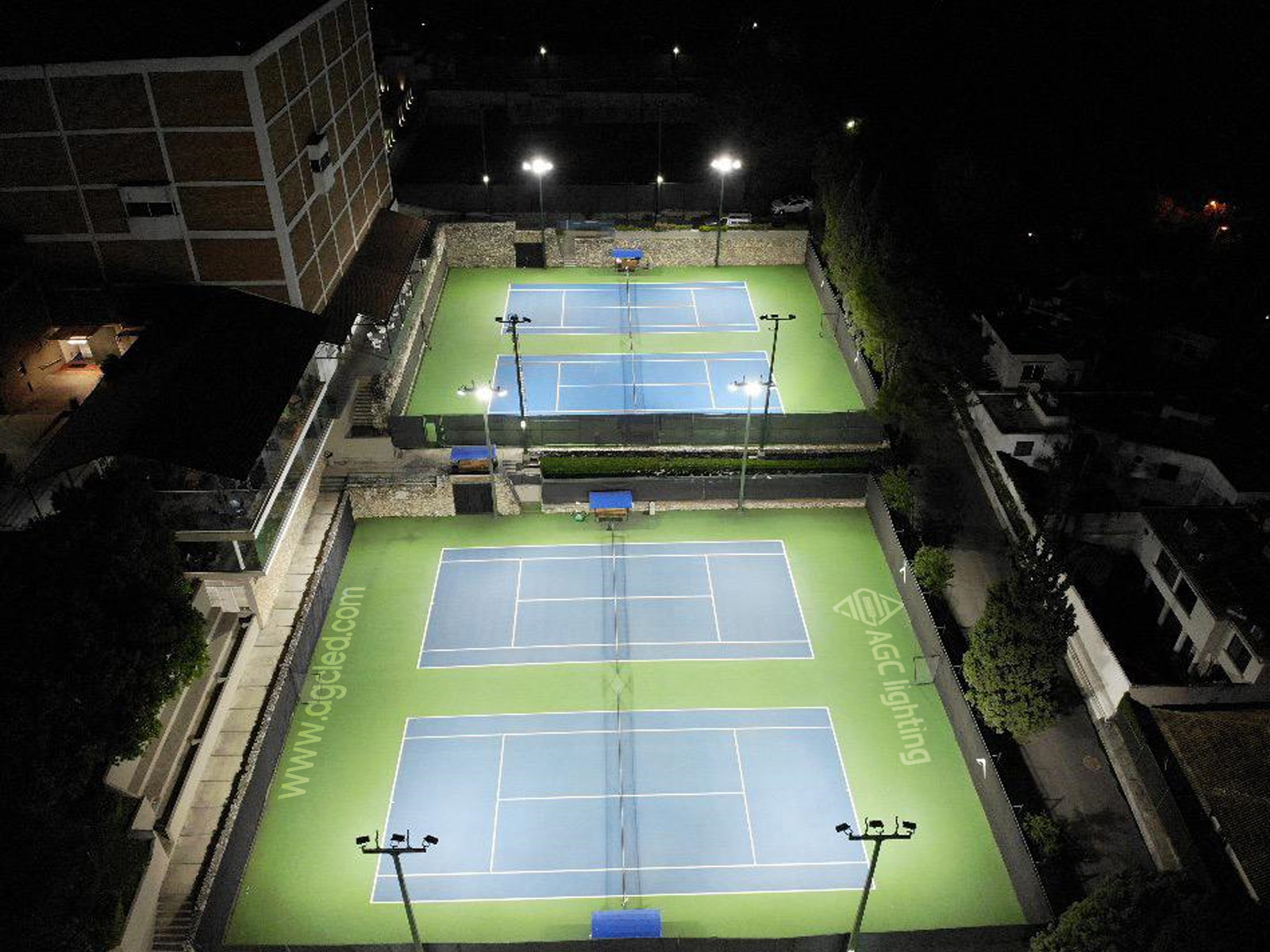
Professional installation ensures lighting systems meet both functional requirements and regulatory standards. Proper pole placement, fixture aiming, and glare control create even illumination across the playing surface while minimizing light spillage that could affect neighboring properties. Our comprehensive installation services cover system design, equipment specification, professional installation, and ongoing maintenance to keep your courts brightly lit and operational for years to come.
Service Details
LIGHTING REQUIREMENTS FOR PADEL COURTS
Padel court lighting must provide consistent, glare-free illumination across the entire playing surface while addressing the unique challenges of enclosed court design. The International Padel Federation and various national sports lighting standards establish minimum illumination levels, uniformity ratios, and glare control requirements for competitive play.
Illumination levels are measured in lux, with recreational play typically requiring 200-300 lux, club competition requiring 300-500 lux, and professional tournament play requiring 500-750 lux or higher. These levels must be maintained uniformly across the court, with uniformity ratios (minimum to average illumination) typically required to exceed 0.7 for quality play. Poor uniformity creates bright and dark areas that affect depth perception and ball tracking.
Glare control presents particular challenges for padel courts. The glass back walls and side walls can create reflections that blind players or affect ball visibility. Proper fixture placement, shielding, and aiming angles minimize these effects. Light fixtures must be positioned to illuminate the court without creating direct glare for players or excessive spill light that could disturb neighbors.
Color rendering affects player performance and comfort. Quality LED systems provide high Color Rendering Index (CRI) values exceeding 80, ensuring accurate color perception of balls, court surfaces, and lines. Color temperature, measured in Kelvin, affects the visual atmosphere—with 4000K-5000K providing neutral white light preferred for most sports applications.
LED TECHNOLOGY BENEFITS FOR SPORTS LIGHTING
LED lighting has become the standard for modern sports facilities, offering numerous advantages over traditional metal halide or high-pressure sodium systems. These benefits are particularly relevant for Houston facilities dealing with high electricity costs and demanding environmental conditions.
Energy efficiency represents the most significant advantage, with LED systems consuming 50-75% less electricity than metal halide systems providing equivalent illumination. For facilities with multiple courts operating evening hours, these savings quickly offset higher initial equipment costs. Many Houston facilities report payback periods of 3-5 years through energy savings alone.
Instant-on capability eliminates warm-up times required by traditional systems. LED lights achieve full brightness immediately, allowing flexible scheduling and eliminating the need to pre-light courts before scheduled play. This capability also supports occupancy-based control systems that automatically adjust lighting based on court usage.
Lifespan and maintenance requirements favor LED technology. Quality LED fixtures typically operate 50,000-100,000 hours before requiring replacement, compared to 6,000-15,000 hours for metal halide lamps. Reduced maintenance frequency lowers ongoing costs and eliminates court downtime for lamp changes. Houston's climate, with high humidity and temperature variations, affects traditional lamp performance more than LED systems.
Light quality improvements include better color rendering, more consistent output over time, and reduced flicker compared to traditional systems. Modern LED drivers eliminate the visible flicker that can affect slow-motion video recording and cause discomfort for some players. Consistent lumen maintenance ensures illumination levels remain stable throughout the fixture's lifespan.
SYSTEM DESIGN AND POLE PLACEMENT
Effective padel court lighting requires careful planning of pole placement, fixture selection, and aiming angles. The enclosed nature of padel courts creates unique design considerations that differ from open tennis or sports fields.
Pole placement typically positions fixtures outside the court perimeter to prevent interference with play and reduce collision hazards. Standard arrangements use 4-6 poles per court, positioned to provide overlapping light patterns that ensure uniform illumination. Pole heights range from 20-30 feet depending on court configuration and surrounding structures, with taller poles generally providing better light distribution and reduced glare.
Structural considerations affect pole specification. Houston's wind load requirements, particularly for facilities in hurricane-prone areas, mandate poles rated for significant wind forces. Foundation design must resist overturning moments created by wind loads on poles and fixtures. Professional engineers calculate these loads and specify appropriate pole ratings and foundation designs.
Aiming and shielding optimize light distribution while controlling glare. Fixtures require precise aiming angles to direct light onto the court surface without creating direct glare for players. Internal shielding and external visors block light spillage that could affect neighbors or create sky glow. Computer modeling software simulates lighting performance, allowing design refinement before installation.
Wiring and control systems require weatherproof installation rated for outdoor exposure. Conduit systems protect wiring from damage and environmental degradation. Control systems range from simple switches to sophisticated networked controls allowing remote operation, scheduling, and energy monitoring. Surge protection is essential in Houston's lightning-prone environment.
INSTALLATION PROCESS AND QUALITY CONTROL
Professional lighting installation follows systematic procedures ensuring safety, code compliance, and optimal performance. The process begins with thorough site evaluation and utility coordination before physical installation commences.
Foundation work for lighting poles requires excavation, formwork, and concrete placement designed to specifications developed by structural engineers. Foundation depth and diameter depend on pole height, wind loads, and soil conditions. In Houston's clay soils, special consideration may be required for drainage around foundations to prevent moisture accumulation and freeze-thaw damage during occasional cold periods.
Pole installation typically uses crane equipment to position poles on prepared foundations. Alignment verification ensures poles are plumb and properly oriented before final anchoring. Grounding systems connect poles to earth ground, providing protection from lightning strikes and electrical faults.
Fixture mounting and aiming requires precision to achieve design illumination levels. Technicians use aiming tools and initial illumination measurements to adjust fixture angles before final tightening. Wiring connections follow electrical code requirements with proper wire sizing, grounding, and weatherproof connections.
Commissioning includes comprehensive illumination testing using light meters positioned across the court surface. Measurements verify that achieved illumination meets design specifications for both level and uniformity. Adjustments to fixture aiming address any deficiencies identified during testing. Documentation provides baseline measurements for future maintenance and verification.
HOUSTON-SPECIFIC CONSIDERATIONS
Installing sports lighting in Houston requires attention to local environmental conditions, regulatory requirements, and utility considerations unique to the region.
Hurricane and high wind exposure affects structural design requirements. Houston's location on the Gulf Coast creates potential for extreme wind events that must be considered in pole and foundation specifications. Wind load calculations follow local building codes that account for this exposure, typically requiring higher ratings than inland locations.
Lightning protection is essential in Houston, which experiences frequent thunderstorms. Proper grounding systems, surge protection devices, and lightning rod integration protect equipment and ensure player safety during storm events. Professional installation includes comprehensive grounding that meets or exceeds code requirements.
Electrical utility rates and demand charges affect system economics. Houston's electricity costs, while moderate compared to some regions, still make energy efficiency economically important. LED systems' reduced consumption directly lowers operating costs. Some facilities incorporate solar power systems to offset daytime charging of battery systems for evening lighting, though this requires significant additional investment.
Light pollution regulations may apply in certain Houston jurisdictions. Shielded fixtures, reduced spill light, and automated controls that extinguish lights when courts aren't in use help comply with dark-sky ordinances and maintain positive neighbor relations. Professional design minimizes off-site light impact while maintaining court illumination quality.
FREQUENTLY ASKED QUESTIONS
What type of lighting do you install for padel courts?
We install professional LED floodlight systems that provide uniform 500 lux illumination with minimal glare. Our systems include dusk-to-dawn automated controls and have a 50,000+ hour lifespan.
Can you add lighting to an existing padel court?
Yes, we can retrofit existing padel courts with professional LED lighting systems. We will assess your current setup and recommend the best lighting solution for your court.
GET YOUR FREE QUOTE TODAY
Serving Houston and surrounding areas with professional Padel Court Lighting Installation services. Contact us now for a free consultation.