
Padel Court Drainage System Design & Installation in Houston
Comprehensive water management solutions for reliable court performance
Proper drainage is arguably the most critical yet often overlooked aspect of padel court construction. In Houston, where annual rainfall exceeds 50 inches and intense storm events can deliver several inches in hours, effective water management means the difference between a consistently playable facility and one plagued by flooding, surface damage, and safety hazards. Professional drainage system design addresses water from multiple sources: direct rainfall, surface runoff from surrounding areas, subsurface water movement, and irrigation overspray.
The flat topography and clay-heavy soils characteristic of much of the Houston area create natural drainage challenges. Water doesn't move quickly through these soils, and the region's minimal elevation changes provide little gravitational assistance for surface drainage. Compounding these challenges, padel courts themselves create large impervious surfaces that generate significant runoff requiring management.
Effective drainage systems protect substantial investments in court construction while ensuring player safety and consistent playability. Standing water creates slip hazards, accelerates surface deterioration, and promotes algae or mold growth. Subsurface water accumulation undermines foundations, causes heaving and settlement, and can destroy court surfaces from below. Our comprehensive drainage services address these risks through engineered systems designed specifically for Houston's climate and soil conditions.
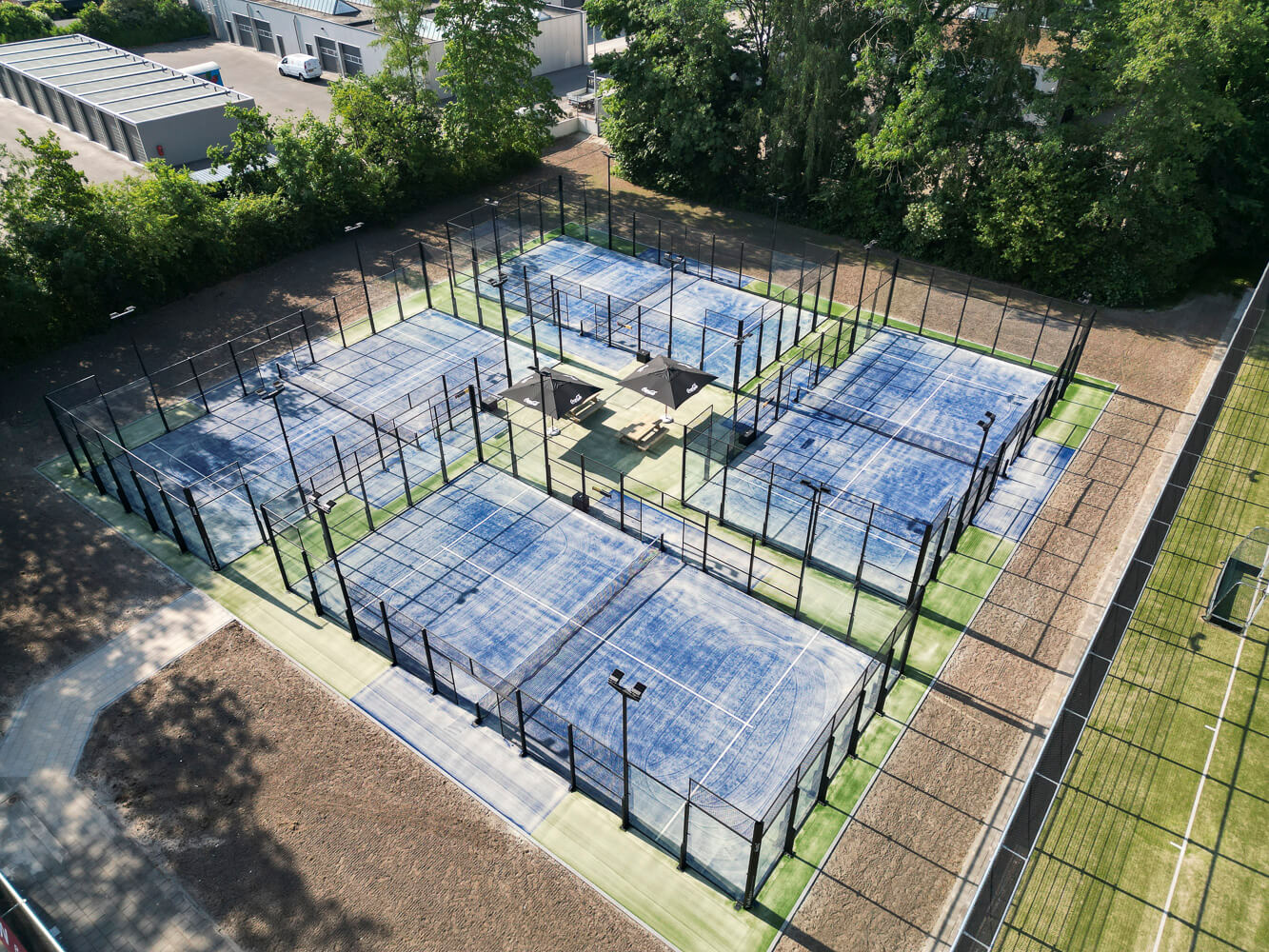
Service Details
UNDERSTANDING PADEL COURT DRAINAGE REQUIREMENTS
Padel court drainage must address multiple water sources and pathways simultaneously. Surface drainage handles water falling directly on the court or flowing from surrounding areas. Subsurface drainage manages groundwater and water percolating through surface materials. Each requires specific strategies and components working as an integrated system.
Surface drainage design begins with proper court grading. While padel courts must be level for playability, subtle slopes—typically 1-2%—direct water toward collection points without affecting game play. These slopes are imperceptible to players but essential for moving water off the court surface efficiently. Collection points include trench drains along court edges, catch basins at low points, and overflow provisions for extreme events.
Subsurface drainage prevents water accumulation beneath the court structure. Clay soils common in Houston hold water and expand when saturated, creating upward pressure that can heave and crack court surfaces. French drain systems—perforated pipes in gravel trenches—intercept groundwater and direct it away from the court foundation. These systems install during initial construction, as retrofitting is disruptive and expensive.
Runoff management addresses water from surrounding areas flowing onto the court. Landscape grading should direct water away from courts rather than toward them. Swales, berms, or retaining walls may be needed on sloped sites to intercept and redirect water. Connection to municipal storm systems provides ultimate water disposal, though system capacity and backflow prevention must be considered.
FRENCH DRAIN AND SUBSURFACE SYSTEMS
French drain systems form the backbone of subsurface water management for padel courts in Houston's clay soil environment. These systems intercept groundwater before it reaches the court foundation and provide pathways for water to escape rather than accumulating.
System design begins with perimeter drains installed around the court footprint. Perforated drainage pipe—typically 4-6 inch diameter—installs in trenches lined with geotextile fabric and surrounded by clean gravel. The fabric prevents soil infiltration that would clog the system while allowing water passage. Pipe slope—minimum 1% grade—ensures gravity flow to collection points or discharge locations.
Collection and discharge points require careful planning. Sump pits with pumps may be necessary where gravity discharge isn't feasible. Pump systems need backup power considerations given Houston's storm-related power outages. Discharge to municipal storm systems requires proper connections and often permits. Surface discharge areas must be positioned to prevent water from recycling back toward the court.
Cleanouts and inspection ports allow system maintenance and verification. These access points should be strategically located for convenient service. Periodic inspection—especially after heavy rains—verifies system function and identifies any clogging or damage requiring attention. Proper initial construction minimizes maintenance needs, but accessibility remains important for long-term performance.
SURFACE DRAINAGE AND COLLECTION SYSTEMS
Surface drainage systems capture and remove water from the court playing area and surrounding surfaces. These systems must handle routine rainfall efficiently while providing capacity for the intense storm events common to Houston's climate.
Trench drains install along court perimeters, collecting water flowing off the playing surface. These linear drains use slotted grates over drainage channels, capturing water while allowing pedestrian and equipment traffic. Stainless or galvanized steel grates resist corrosion in Houston's humid environment. Channel materials include polymer concrete, fiberglass, or metal depending on load requirements and aesthetic preferences.
Catch basins serve as collection points where water concentrates. These underground structures include sediment traps that collect debris before it enters drainage pipes, reducing maintenance and clogging risks. Regular cleaning of catch basin traps maintains system capacity. Basin sizing considers expected water volumes and debris loads for specific locations.
Overflow provisions prevent system overwhelm during extreme events. Even well-designed systems may be challenged by hurricane-level rainfall. Overflow routes—swales, emergency outlets, or surface pathways—direct excess water away from critical areas without causing damage. These provisions protect the court and surrounding structures when primary systems reach capacity.
Grate and inlet design balances drainage capacity with safety and maintenance concerns. Openings must be large enough for water entry but small enough to prevent foot or equipment entrapment. Removable grates facilitate cleaning and maintenance. Materials resist corrosion and withstand loads from maintenance equipment.
INTEGRATION WITH COURT CONSTRUCTION
Drainage systems must be integrated with overall court construction, installing in proper sequence with other components. Retrofitting drainage into existing courts is significantly more expensive and disruptive than proper initial installation.
Site preparation phases include rough grading to establish drainage slopes and identify any problem areas requiring special attention. Soil testing informs drainage design—clay soils require more extensive systems than sandy soils with natural drainage. Utility location prevents conflicts with existing infrastructure during excavation.
Foundation construction incorporates drainage elements. Perimeter drains install before or alongside foundation work. Underground piping routes must coordinate with foundation elements to prevent structural conflicts. Backfill materials around foundations should promote drainage rather than impede it.
Surface installation phases include final grading to precise slopes, installation of trench drains and catch basins, and connection of surface drainage to underground systems. The completed surface should sheet-flow water toward collection points without ponding. Testing with water hoses verifies drainage function before final acceptance.
Connection to municipal storm systems or discharge areas completes the installation. These connections require proper materials, secure joints, and often permits and inspections. Backflow prevention may be required where storm system surging could reverse flow onto the court. Documentation of system layout facilitates future maintenance and repairs.
HOUSTON CLIMATE AND SOIL CONSIDERATIONS
Houston's specific environmental conditions require drainage adaptations that might be unnecessary in other regions. Understanding these factors ensures systems perform reliably through the area's challenging weather patterns.
Clay soils dominate much of the Houston area, presenting particular drainage challenges. These soils have low permeability—water moves through them slowly if at all. Saturated clay expands, creating upward pressure on court foundations. Effective drainage in clay requires intercepting water before it saturates native soils and providing alternative pathways for water movement.
Intense rainfall events stress drainage systems. Houston's thunderstorms can deliver 2-3 inches of rain in an hour, with tropical systems bringing even more. Drainage systems must handle these peak flows without backup or overflow onto courts. Pipe sizing, grate capacity, and storage provisions account for these extreme events rather than average conditions.
Flat topography limits gravity drainage options. Houston's minimal elevation changes mean water must sometimes travel significant distances horizontally to find discharge points. This requires careful slope maintenance over long runs and may necessitate pump systems where gravity discharge isn't feasible. GPS-guided excavation equipment helps maintain precise grades over extended distances.
Seasonal variations affect drainage performance. Houston's wet season—roughly April through October—places continuous demands on drainage systems. Extended dry periods can cause soil shrinkage, potentially affecting system alignment or creating preferential flow paths. Flexible connections and proper bedding help systems accommodate these seasonal soil movements.
FREQUENTLY ASKED QUESTIONS
Do you offer free consultations?
Yes, we provide free consultations and quotes for all padel court projects in Houston and surrounding areas. Contact us to schedule your consultation.
What areas do you serve?
We serve Houston and all surrounding areas including Pasadena, Pearland, League City, Baytown, Sugar Land, Missouri City, Katy, Stafford, and more.
GET YOUR FREE QUOTE TODAY
Serving Houston and surrounding areas with professional Padel Court Drainage Systems services. Contact us now for a free consultation.